
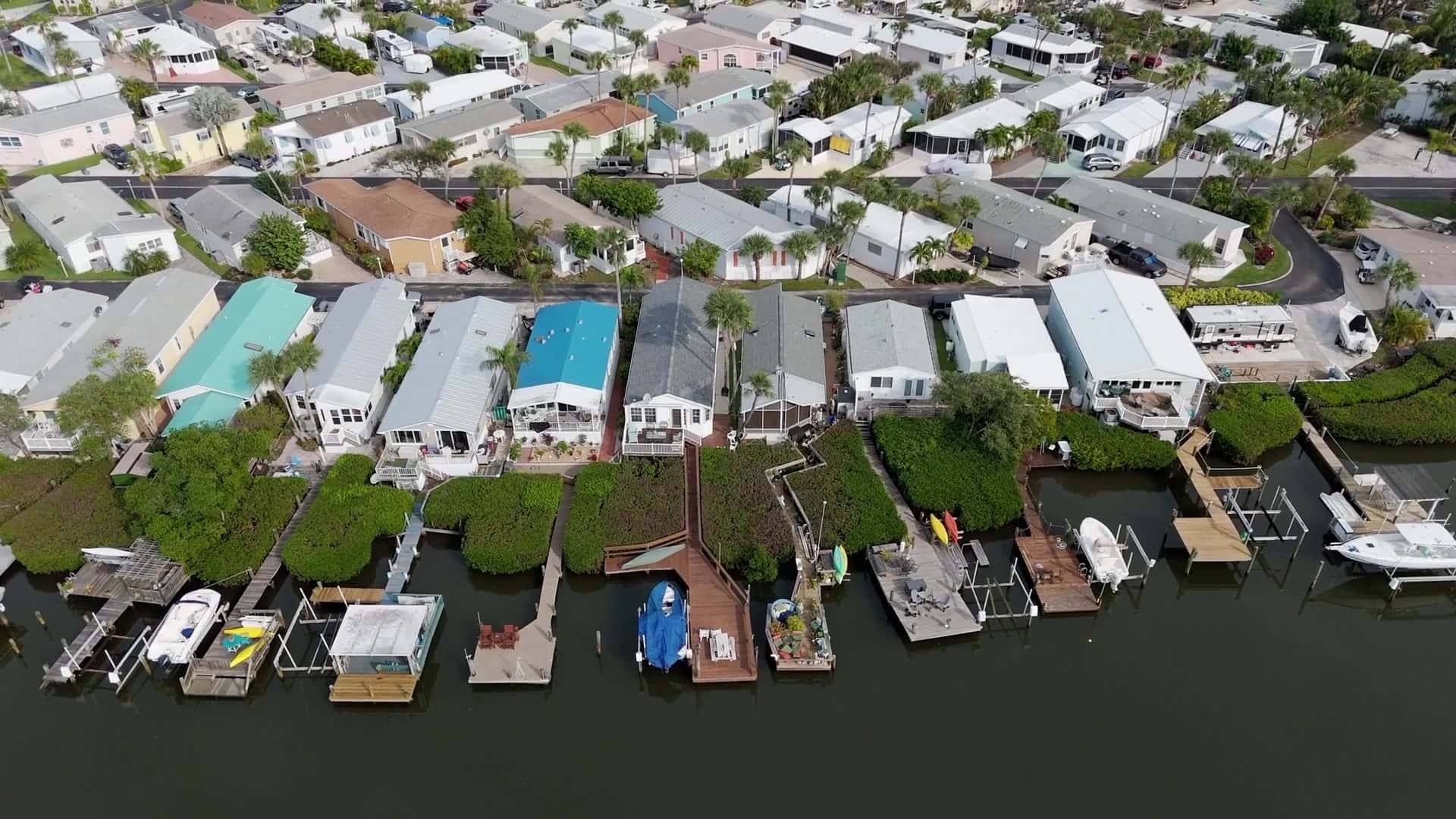
Spring Hill, FL
Storm Damage Repair in Spring Hill, FL
Much of Spring Hill still sits under original Deltona-era shingles insurers won't renew — we replace them right, Timber Pines ARC paperwork included.
GAF Certified
6 Counties
Since 2010
Warranty-Backed
After a storm, fast action limits interior damage and protects your claim. We provide emergency tarping, thorough damage documentation, and complete repairs — and we work directly with your insurer through the process.
Local & Trusted
Every storm damage repair in Spring Hill is done right and backed by our workmanship warranty. We’ve worked Hernando County roofs since 2010.
Why Spring Hill Homeowners Choose Tri Peak for Storm Damage Repair
- Emergency tarping to stop active leaks
- Full photo documentation for your claim
- Direct coordination with your adjuster
- Wind & hail specialists
Permits & Inspections in Spring Hill
All roofing permits for Spring Hill — which is an unincorporated Census-Designated Place, not an independent municipality — are issued by the Hernando County Building Division, located at 789 Providence Blvd, Brooksville, FL 34601, phone (352) 754-4050, email bldg@hernandocounty.us. There is no separate Spring Hill city building department; the county has sole permitting jurisdiction.
Applicants register and submit through Hernando County's Tyler Technologies EnerGov self-service portal (hernandocountyfl-energovweb.tylerhost.net), selecting the re-roof/roofing permit type, uploading the contractor's license, notice of commencement (for jobs over the statutory threshold), product approval/NOA documentation for the roofing system, and a roof plan/scope of work; applications can also be submitted or reviewed in person at the Brooksville office. Plan review generally takes roughly 10-21 days depending on project complexity, and simple re-roof permits over the counter/online are typically faster than full re-roof-with-structural-repair jobs. Once issued, roofing jobs require a mid-roof "dry-in"/underlayment inspection before the roof covering is installed and a final inspection after completion; inspections are scheduled by phone or email with the Building Division. Minor maintenance (patching a small area of shingles, resealing flashing) generally does not require a permit, but any full re-roof, structural roof-deck work, or work affecting a significant portion of the roof area does.
Florida Building Code & Wind Requirements
Per the Florida Building Code 8th Edition (2023)/ASCE 7-22 wind maps, Hernando County (including Spring Hill) sits in the zone where ultimate design wind speed (Vult) generally runs in the 140–150 mph range for Risk Category II structures, stepping down somewhat further inland and rising for areas near the Gulf/Weeki Wachee River corridor with sufficient water fetch (which can trigger Wind-Borne Debris Region status even a mile+ inland). Some third-party permit-guide sites describe Spring Hill's design wind speed as "120 mph inland vs. 130 mph coastal," which likely reflects an older nominal (ASD, pre-2010 code) wind speed convention rather than current Vult figures — the two scales are not directly comparable. Contractors/homeowners should confirm the exact site-specific Vult and WBDR status via the ASCE 7 Hazard Tool (asce7hazardtool.online) or Hernando County Building Division before permitting, since Spring Hill parcels near canals/lakes/the Weeki Wachee River can fall inside a WBDR even where the surrounding area does not.
Spring Hill re-roofs and roof repairs fall under the Florida Building Code, 8th Edition (2023), which references ASCE 7-22 for wind-load calculations. Because Hernando County sits in a mapped Wind-Borne Debris Region (WBDR) — inland areas trigger WBDR status wherever the ultimate design wind speed reaches 140 mph — any re-roof or major repair permit is reviewed against FBC Chapter 15 (roof assemblies) and the applicable wind-uplift/attachment tables. Key items enforced locally: secondary water barrier (self-adhering underlayment or equivalent) is required on new roof deck for re-roofs per FBC/HVHZ-adjacent provisions statewide since 2010 code cycles; nailing patterns for roof decking follow the FBC high-wind attachment schedule rather than the old 6-nail pattern; all shingles, tile, and metal panels installed must carry current Florida Product Approval (FL#) or Miami-Dade NOA rated for the site's design wind speed; mid-roof "in-progress" inspection is required after dry-in/underlayment and before covering, plus a final roof inspection before the permit closes. Openings (skylights, roof vents) must also meet wind-borne debris impact standards where applicable.
Insurance & Your Spring Hill Roof
Spring Hill homeowners are squarely in the Florida hard-insurance-market pattern: insurers commonly require a 4-point inspection on homes 20+ years old (a large share of Spring Hill's original Deltona-era stock), and many carriers now decline or non-renew shingle roofs once they pass roughly 15-20 years old regardless of remaining functional life — a significant issue given how much of Spring Hill's housing dates to the late 1960s-1980s. Wind mitigation inspections (hip roof shape, roof-deck attachment, roof-to-wall connections/hurricane straps, secondary water barrier, opening protection) can cut premiums 20-40% and are a major lever locally. The state's My Safe Florida Home program (relaunched application cycles including a reopening in August 2025, ~$280 million appropriated for 2025-26) offers free wind-mitigation inspections and matching grants for qualifying older homes to fund roof-deck attachment, roof-to-wall, and secondary water resistance upgrades — directly applicable to Spring Hill's aging roof stock. Average reported homeowners premiums in Spring Hill run notably above national norms (cited around $2,881/year in recent local market data), reinforcing why proof of a permitted, code-compliant, wind-mitigation-credited roof matters to homeowners here.
Local Roofing Conditions in Spring Hill
Spring Hill sits in a hurricane-prone inland Gulf Coast zone: it isn't beachfront, but its proximity to the Gulf of Mexico and low-lying spring/canal-fed terrain (Weeki Wachee River, numerous man-made lakes) means salt-laden air still accelerates corrosion of metal fasteners, flashing, and gutters even well inland, and can push some parcels into Wind-Borne Debris Region status despite not being waterfront. The area sees direct and glancing hurricane/tropical-storm impacts on a near-annual basis during the June-November season, driving demand for wind-rated shingle/tile/metal systems and secondary water barriers. Intense summer heat and UV exposure (subtropical central Florida climate) accelerates asphalt shingle granule loss and aging, shortening realistic shingle lifespan versus cooler climates. Frequent, heavy convective summer thunderstorms and hurricane-season rain bands stress aging underlayment and flashing, making leak-prone original 1970s-80s Deltona-era roofs (many now well past typical shingle service life) a recurring repair/replace driver. Mature oak and pine tree canopy in older established sections (vs. newer cleared subdivisions) adds debris-impact and gutter-clogging considerations not uniform across the city.
HOA & Neighborhood Notes
Spring Hill is a patchwork of HOA and non-HOA neighborhoods rather than one master-planned community, since much of the original Deltona-platted grid predates modern HOA structures. Notable deed-restricted/HOA communities with architectural review relevant to roofing include Timber Pines (1,400-acre, 55+ gated country-club community, 3,452 homes across 57 villages, resident-owned and debt-free — roof material/color changes typically require ARC approval), Seven Hills, Sterling Hill, Lake in the Woods, and Oak Hills (golf-course community that is deed-restricted but has no HOA fee). Many of the original 1970s-80s Deltona-section homes have no active HOA at all, so roofing contractors should verify per-subdivision whether ARC/color-and-material approval is required before installation, rather than assuming county-wide uniformity.
Neighborhoods We Serve in Spring Hill
We install and repair roofs throughout Spring Hill, including Timber Pines (55+ gated golf community), Seven Hills, Sterling Hill, Lake in the Woods, Oak Hills (golf-course, deed-restricted, no HOA fee), Original Deltona-platted "Spring Hill" grid sections (unit/section numbered), Brookridge (adjacent 55+ community) — near Weeki Wachee Springs State Park (home of the famous live mermaid shows and Buccaneer Bay spring-fed water park, National Register of Historic Places), The historic Spring Hill "waterfall" sign/entrance feature from the original Deltona Corporation marketing days, US-19/Mariner Boulevard commercial corridor.
Frequently Asked Questions
Do I need a permit to replace my roof in Spring Hill?
Yes, you need a permit for a full re-roof in Spring Hill, and it is issued by the Hernando County Building Division.
Can my insurer drop me over my roof in Spring Hill?
Yes, insurers in Spring Hill commonly decline or non-renew policies for homes with shingle roofs that are roughly 15 to 20 years old, regardless of their remaining functional life.
Should I file a claim before or after calling you?
Call us first — we’ll inspect and document the damage so your claim reflects the full scope of what happened.
Do you offer emergency service?
Yes, we provide emergency tarping and rapid response after named storms.
Do you serve all of Spring Hill?
Yes — Tri Peak Roofing serves Spring Hill and the surrounding Hernando County area, including Timber Pines (55+ gated golf community), Seven Hills, Sterling Hill and beyond.
Ready for Storm Damage Repair in Spring Hill?
Get a free inspection from a local Tri Peak crew — photos of what we find and a written price.
Call (352) 810-4026