
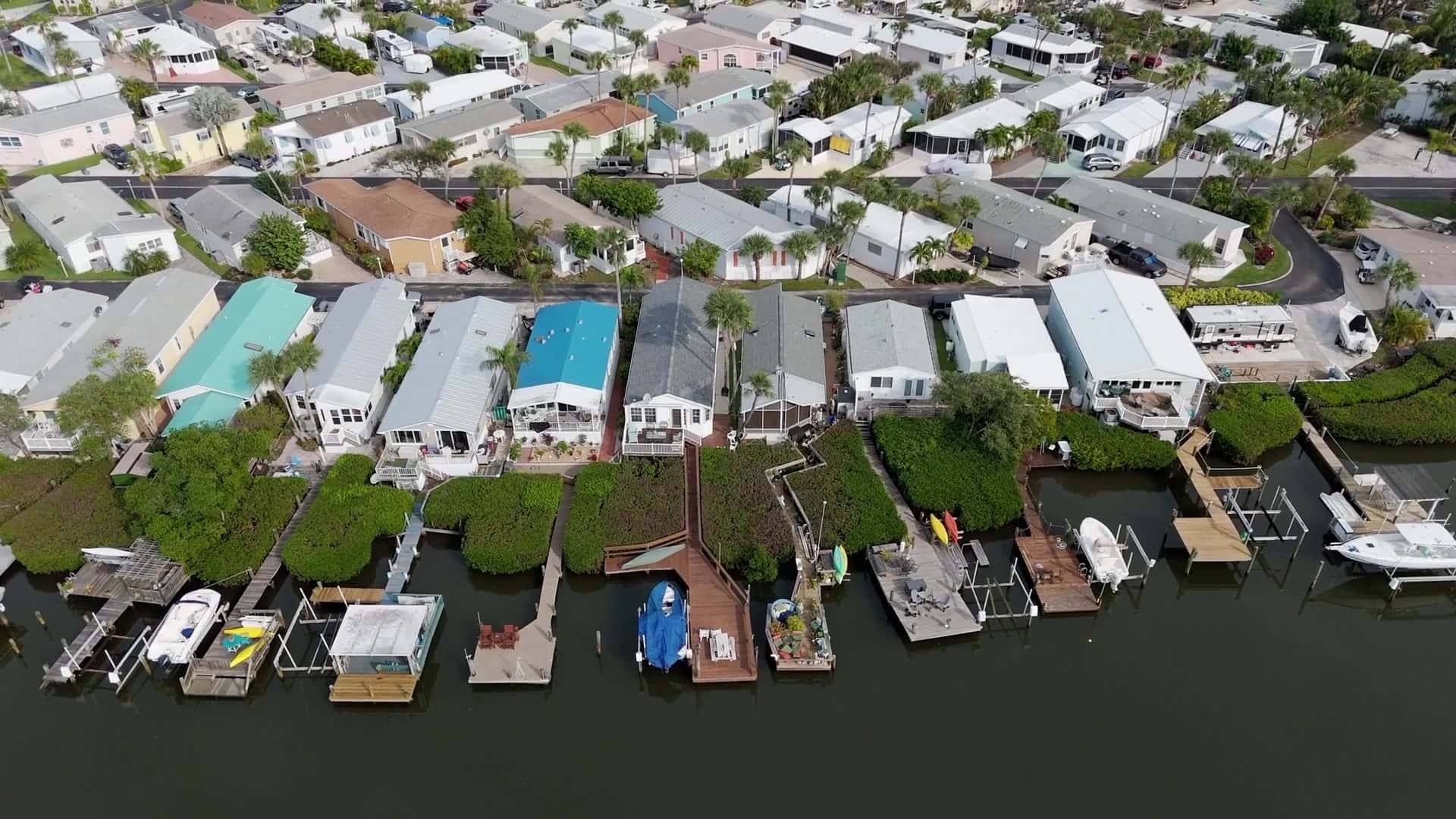
Dunedin, FL
Storm Damage Repair in Dunedin, FL
Hurricane, wind, and hail damage repair with insurance help. Honest pricing, quality workmanship, and free inspections for Dunedin homeowners.
GAF Certified
6 Counties
Since 2010
Warranty-Backed
After a storm, fast action limits interior damage and protects your claim. We provide emergency tarping, thorough damage documentation, and complete repairs — and we work directly with your insurer through the process.
Local & Trusted
Every storm damage repair in Dunedin is done right and backed by our workmanship warranty. We’ve worked Pinellas County roofs since 2010.
Why Dunedin Homeowners Choose Tri Peak for Storm Damage Repair
- Emergency tarping to stop active leaks
- Full photo documentation for your claim
- Direct coordination with your adjuster
- Wind & hail specialists
Permits & Inspections in Dunedin
City of Dunedin Building Division (a separate incorporated-city authority, not Pinellas County) issues roofing permits for all addresses within Dunedin city limits. Office: Dunedin City Hall, Community Development Department, 737 Louden Avenue, Suite 137, Dunedin, FL 34698. Phone: 727-298-3210. Permits are submitted and tracked through the Dunedin Citizen Self Service (CSS) online portal (a Citizenserve-based system) at dunedin.gov; email permits@dunedin.gov for process questions. Addresses just outside Dunedin's city limits (pockets of unincorporated Pinellas County around the city, plus nearby unincorporated areas toward Palm Harbor and Ozona) fall instead under Pinellas County Building and Development Review Services — homeowners should confirm jurisdiction via the Pinellas County Property Appraiser (pcpao.gov) address lookup before assuming which authority applies, since city-limit lines around Dunedin are irregular and don't always match ZIP code or mailing-address boundaries.
Reroof permits in Dunedin are applied for through the CSS portal, where the contractor or owner uploads a completed Building Permit Application, a Product Approval Affidavit/specification list identifying each roofing component (underlayment, shingle/tile/metal system) by its current Florida Product Approval number (or Miami-Dade NOA where used) with matching manufacturer installation instructions, and the property's parcel/site information. The city publishes a dedicated Florida Product Approval product-specification list document and a Roof Inspection Affidavit form on its Building Division documents page. Per city permitting guidance, straightforward reroof permits are typically reviewed and issued within roughly 1-2 weeks of a complete submittal, with more complex projects following the standard 2-4 week review cycle cited in Dunedin's permitting guide; inspections (including the required in-progress dry-in/nailing inspection and final roof inspection) are scheduled through the same CSS portal. A notarized roofing affidavit is required at final inspection covering nailing pattern/fastener compliance and secondary water barrier installation where applicable; the city's guidance notes affidavits are only accepted when the in-progress inspection was scheduled the prior working day, and missing or incomplete affidavit paperwork at final can trigger a failed inspection and reinspection fee. Fees are calculated from declared job value (materials + labor) per the city's adopted fee schedule in the Code of Ordinances Chapter 105.
Florida Building Code & Wind Requirements
Dunedin, like the rest of Pinellas County, falls under Florida Building Code 8th Edition (2023, referencing ASCE 7-22 with FBC's interpolated wind provisions carried from ASCE 7-16 methodology): Ultimate Design Wind Speed (Vult) of approximately 145 mph for Risk Category II structures (typical single-family homes), roughly 135 mph for Risk Category I, and roughly 155-157 mph for Risk Category III/IV, with interpolation permitted at specific sites. Because Dunedin borders the Gulf directly (its western edge fronts St. Joseph Sound, with Honeymoon Island and Caladesi Island State Parks just offshore), most of the city falls within the Wind-Borne Debris Region (triggered at 140+ mph generally, or within 1 mile of the coast at 130+ mph), requiring impact-rated glazing or shutter protection on qualifying openings for new construction and major reroofs. Verify the exact Vult and WBD status per parcel using the Florida Building Code wind speed maps or the ASCE 7 Hazard Tool, since waterfront lots along the Dunedin Causeway, Edgewater Drive, and the barrier-island-adjacent areas can sit in a higher wind/exposure category than inland parcels a few blocks east.
Dunedin enforces the Florida Building Code 8th Edition (2023) under its own Building Division rather than through the county. Reroofs must use fastening schedules tied to the specific Florida Product Approval (or Miami-Dade NOA, used voluntarily by some contractors for higher-rated products) for the installed system, and the city requires a roofing/nailing affidavit at final inspection city-wide. Given Dunedin's direct Gulf/sound-front exposure and Wind-Borne Debris Region designation across most of the city, sealed-roof-deck provisions (self-adhered cap sheet or taped/sealed underlayment seams) are generally required on reroofs to satisfy FBC's secondary water barrier intent. Dunedin is NOT in the Miami-Dade/Broward High-Velocity Hurricane Zone (HVHZ) — standard Florida Product Approval, not Miami-Dade NOA, is the baseline compliance path, though NOA-rated products are accepted and sometimes used for their higher tested wind-uplift ratings. The city's historic bungalow stock downtown (many homes built 1920s-1950s) can also trigger additional scrutiny for homes in or near the Dunedin Historic District, where exterior work including visible roofing materials may require review for compatibility even though roofing itself is not typically subject to the same design-review as siding or window changes.
Insurance & Your Dunedin Roof
Florida Statute 627.7011 prohibits insurers from denying or refusing to renew a policy solely because a roof is under 15 years old; for roofs 15 years or older, a certified inspection documenting at least 5 years of remaining useful life (permitted under HB 1611, 2024, to be performed by licensed contractors, home inspectors, or engineers) can preserve coverage. Newer 2026 legislation (SB 808/HB 815, effective July 1, 2026) adds further restrictions on age-based non-renewals, and standard non-renewal notice requirements call for at least 120 days' written notice. Dunedin's coastal exposure and older housing stock (much of the downtown core and near-water neighborhoods predate 1980) make roof-age-triggered underwriting scrutiny a frequent, live issue for local homeowners working with Citizens Property Insurance or a shrinking private market. A wind mitigation inspection (form OIR-B1-1802) documenting features like a secondary water barrier, roof-to-wall connections (hurricane clips/straps), and opening protection can reduce the wind portion of a premium by roughly 10-45%, and the state's My Safe Florida Home program (means-tested) subsidizes both the inspection and qualifying roof/opening-protection retrofits — relevant messaging for Dunedin homeowners near the water facing renewal non-renewal risk or steep wind premiums.
Local Roofing Conditions in Dunedin
Dunedin fronts St. Joseph Sound and the Gulf of Mexico directly, with Honeymoon Island and Caladesi Island just offshore, so salt-air corrosion on fasteners, flashing, vent stacks, and metal roofing components is a persistent issue city-wide, more pronounced than in inland Pinellas cities — galvanic corrosion and premature fastener failure are common inspection findings on waterfront and near-water homes. The city's historic housing stock (much of downtown dating to the 1920s-1950s) means many roofs are on multiple reroof cycles and original decking/framing may need evaluation during tear-off, particularly on unpermitted or older additions common in bungalow neighborhoods. Dunedin's mature tree canopy — live oaks and other large hardwoods concentrated in Hammock Park-adjacent neighborhoods, Dunedin Isles, and much of the historic core — adds debris load, accelerates granule loss and moss/algae growth on shaded roof faces, and increases storm-debris impact risk during named storms. Year-round UV exposure plus Tampa Bay's convective thunderstorm season (June-September) and direct hurricane/tropical storm threat (August-October) stress roofs further, and because most of the city sits inside the Wind-Borne Debris Region, opening protection and sealed-deck/secondary-water-barrier requirements are a routine part of reroof scope here, not an edge case as in some inland municipalities.
HOA & Neighborhood Notes
Dunedin's neighborhood texture ranges from largely unrestricted older platted subdivisions and the historic downtown core (where architectural review, when it applies, comes from historic-district guidelines rather than a private HOA) to newer, more actively managed communities with HOA or condo association architectural approval requirements, particularly in golf-course-adjacent developments like Dunedin Country Club Estates and waterfront condo associations along the causeway and Edgewater Drive. Where an HOA or condo association exists, roof color and material approval before reroofing is common practice, especially for communities marketing coastal or golf-course aesthetics, so contractors should budget time for an association architectural review step in addition to the city permit. Homes within or near the Dunedin Historic District may also face design-compatibility expectations tied to the city's historic preservation guidelines rather than a private association, which is a distinct process from standard HOA approval and worth flagging separately to homeowners in that specific area.
Neighborhoods We Serve in Dunedin
We install and repair roofs throughout Dunedin, including Downtown Dunedin / Main Street Historic District, Dunedin Isles, Edgewater Drive corridor, Hammock Park-adjacent neighborhoods, Dunedin Country Club Estates, Highland Groves, San Salvador, Virginia Groves Terrace — near Honeymoon Island State Park, Caladesi Island State Park, Dunedin Causeway.
Frequently Asked Questions
Do I need a permit to replace my roof in Dunedin?
Yes, you need a permit to replace your roof in Dunedin, which is issued by the City of Dunedin Building Division.
Can my insurer drop me over my roof in Dunedin?
Insurers generally cannot drop coverage solely because a roof is under 15 years old, but roofs 15 years or older require a certified inspection showing at least five years of remaining useful life to preserve coverage.
Should I file a claim before or after calling you?
Call us first — we’ll inspect and document the damage so your claim reflects the full scope of what happened.
Do you offer emergency service?
Yes, we provide emergency tarping and rapid response after named storms.
Do you serve all of Dunedin?
Yes — Tri Peak Roofing serves Dunedin and the surrounding Pinellas County area, including Downtown Dunedin / Main Street Historic District, Dunedin Isles, Edgewater Drive corridor and beyond.
Ready for Storm Damage Repair in Dunedin?
Get a free inspection from a local Tri Peak crew — photos of what we find and a written price.
Call (352) 810-4026