What Is the Best Roof for a Hurricane in Florida?
By Tyler Varn, Owner, Tri Peak Roofing · Updated August 15, 2026
Quick Answer
The strongest roof for a Florida hurricane combines three things: a hip shape (sloped on all four sides), a wind-rated covering such as standing-seam metal roofing or a Florida-approved impact-rated shingle or tile, and, most important, a sealed roof deck with ring-shank nail attachment underneath. Shape and material get all the attention, but how the roof is fastened and sealed is what actually keeps wind-driven rain out of your home. Not sure what’s under your roof? A free inspection is the place to start.
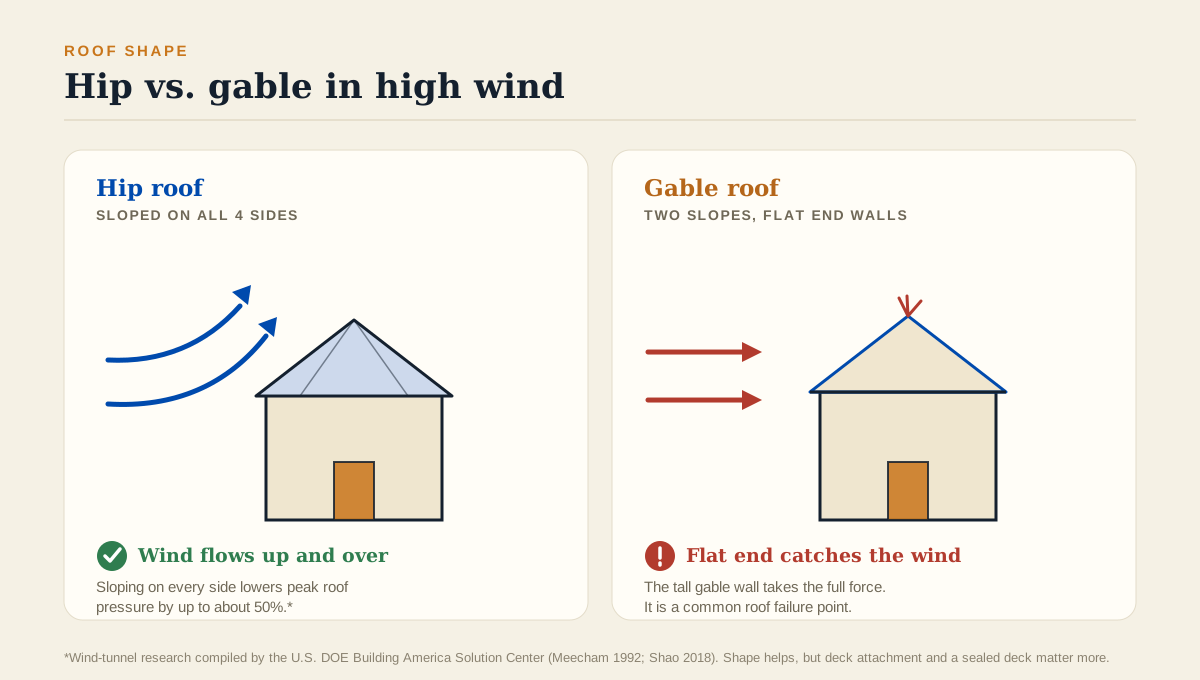
Best roof shape for high wind: hip vs. gable
A hip roof slopes down on all four sides, so wind flows up and over it from any direction. A gable roof has two slopes and two flat, triangular end walls. In high wind, that tall gable wall catches the full force of the storm, and the roof-to-gable connection is a common failure point. That pattern is well documented after Hurricane Andrew.
Wind-tunnel research compiled by the U.S. Department of Energy’s Building America program (Meecham 1992; Shao 2018) found peak wind pressures on a hip roof can be as much as ~50% lower than on a comparable gable roof. Academic work at NJIT reached the same conclusion: roofs with four or more slopes handle wind loads better than two-slope gables.
Here’s the honest part, though: shape is not destiny. A well-attached, well-sealed gable roof will outperform a poorly-attached hip roof every time. Re-framing a roof to change its shape is rarely worth the cost. If you have a gable, the smart moves are bracing the gable end and upgrading the attachment and deck (more on that below), not tearing off a sound roof. That’s exactly what we look at during a free roof inspection.
Does roof pitch matter? The 30° rule
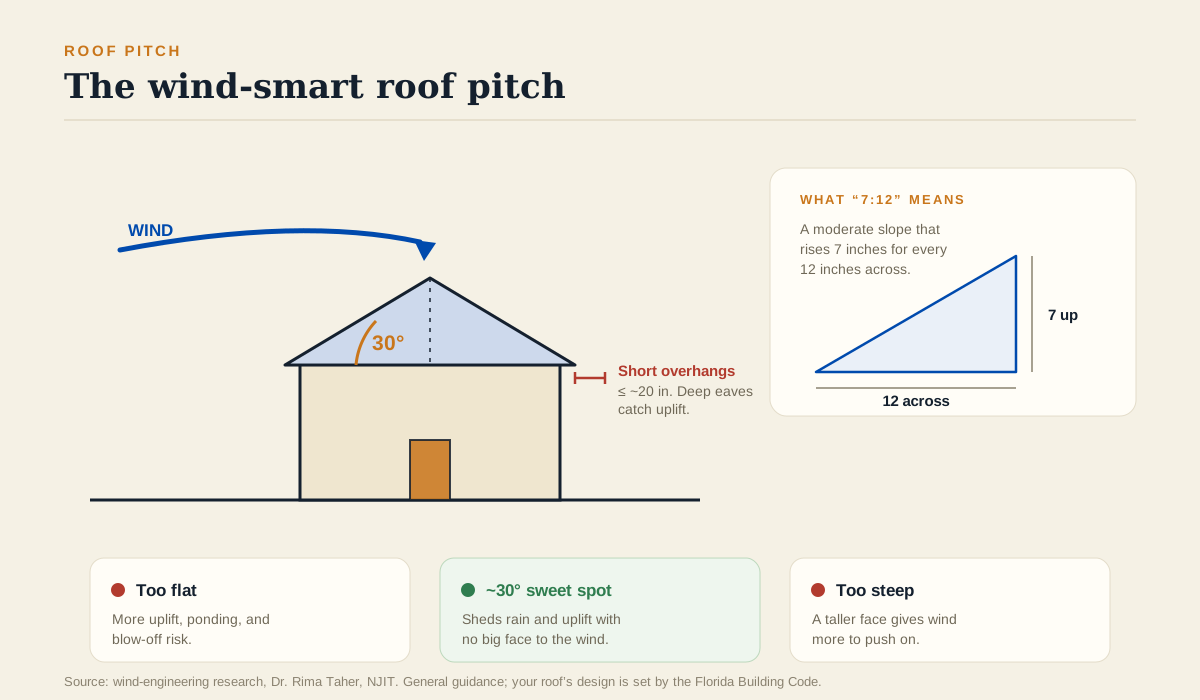
Roof pitch (steepness) plays a smaller but real role. Wind-engineering research suggests a moderate slope of around 30°, roughly a 7:12 pitch, performs best: steep enough to shed uplift and rain, but not so steep that it presents a large vertical face for wind to push against. Very flat roofs see more uplift; very steep roofs catch more wind.
The same research points to keeping roof overhangs short, about 20 inches or less. Deep eaves give a hurricane something to grab and peel. Your roof’s pitch is set by its existing structure, so this isn’t usually something you’d change, but it helps explain why some roofs in your neighborhood fare better than others.
Best roofing materials for hurricanes (by wind performance)
No roofing material is “hurricane-proof,” but they don’t all perform equally. Here’s how the common Florida choices stack up. One caveat before the table: the wind rating of any roof depends on the specific product and how it’s installed. Every approved system carries its own Florida Product Approval or Miami-Dade NOA, so treat the numbers below as general ranges, not guarantees.
Standing-seam metal is the strongest all-around performer: its concealed fasteners and interlocking panels resist the edge-peeling that tears off other roofs, and quality systems are approved to very high wind speeds. Concrete and clay tile are heavy, which helps resist uplift when installed with proper clips or foam adhesive. But tile is brittle: flying debris can crack individual tiles and open a path for water. Architectural (dimensional) shingles rated to the higher ASTM D7158 wind classes and UL 2218 Class 4 for impact are a strong, affordable option. The one material to avoid for Florida exposure is the old 3-tab shingle, which is effectively obsolete for our wind zone.
| Roofing material | Wind performance* | What to watch for |
|---|---|---|
| Standing-seam metal | Highest; interlocking panels, concealed fasteners | Higher upfront cost; hire an installer who does metal regularly |
| Concrete / clay tile | Strong when clipped or foam-set; heavy resists uplift | Brittle; debris can crack tiles and cause hidden leaks |
| Class-4 architectural shingle | Good; up to the higher ASTM D7158 (Class G/H) ranges | Rating is product-specific; verify the Florida Product Approval |
| 3-tab shingle | Weakest; not suited to FL hurricane exposure | Avoid for re-roofs in our wind zone |
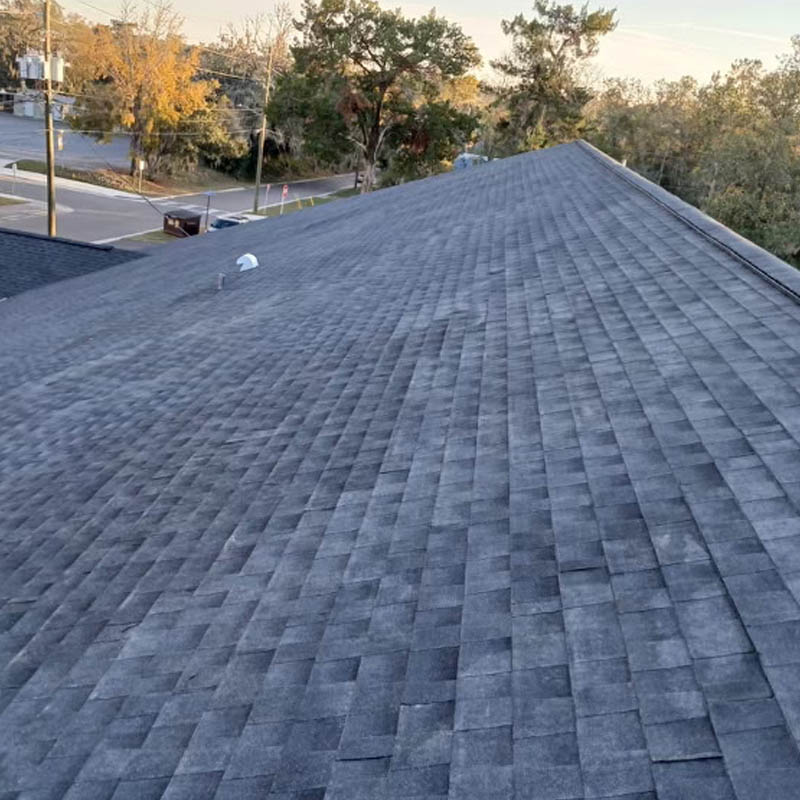
Metal vs. shingle vs. tile for Florida homes
If you’re re-roofing, the choice usually comes down to these three. There’s no single “right” answer. It depends on how long you plan to stay, your budget, and the look you want.
Metal costs more upfront but lasts the longest and performs best in wind. It also pairs naturally with a roof replacement if your current roof is near end of life. Architectural shingles are the most affordable and most common, and a Class-4 product still handles Nature Coast wind well. Tile gives a classic Florida look and lasts decades, but the added weight and debris-cracking mean installation quality matters more than with any other material.
| Factor | Standing-seam metal | Architectural shingle | Concrete / clay tile |
|---|---|---|---|
| Wind resistance | Excellent | Good (Class 4) | Good when clipped |
| Debris impact | Excellent; dents, rarely breaches | Good (Class 4 rated) | Poor; tiles crack |
| Typical lifespan | 40–70 yrs | 20–30 yrs | 40–50+ yrs |
| Relative cost | Highest | Lowest | High |
| Weight on structure | Light | Medium | Heavy |
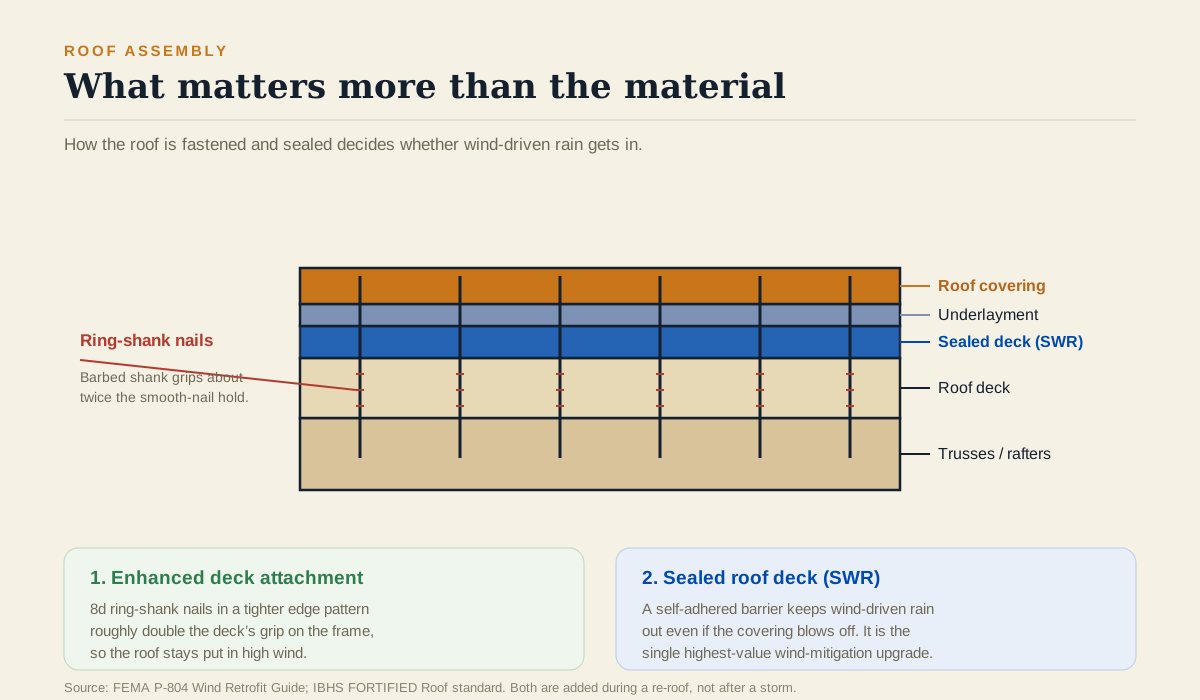
What matters more than the material: deck attachment & a sealed roof deck
This is the part most homeowners never hear about, and it matters more than the color or material on top. Two upgrades, both added during a roof replacement rather than after a storm, do the heavy lifting:
1. Enhanced deck attachment. How the plywood deck is nailed to the trusses decides whether your roof stays put. Switching from smooth nails to 8d ring-shank nails in a tighter edge pattern roughly doubles the deck’s grip on the frame, according to FEMA and the Insurance Institute for Business & Home Safety (IBHS).
2. A sealed roof deck (secondary water barrier). A self-adhered membrane over the deck seams keeps wind-driven rain out even if the roof covering blows off entirely. FEMA credited sealed decks with preventing interior water damage in Hurricanes Michael and Ian. It’s widely considered the single highest-value wind-mitigation feature you can add, and it’s standard practice on the roofs we install, including metal systems.
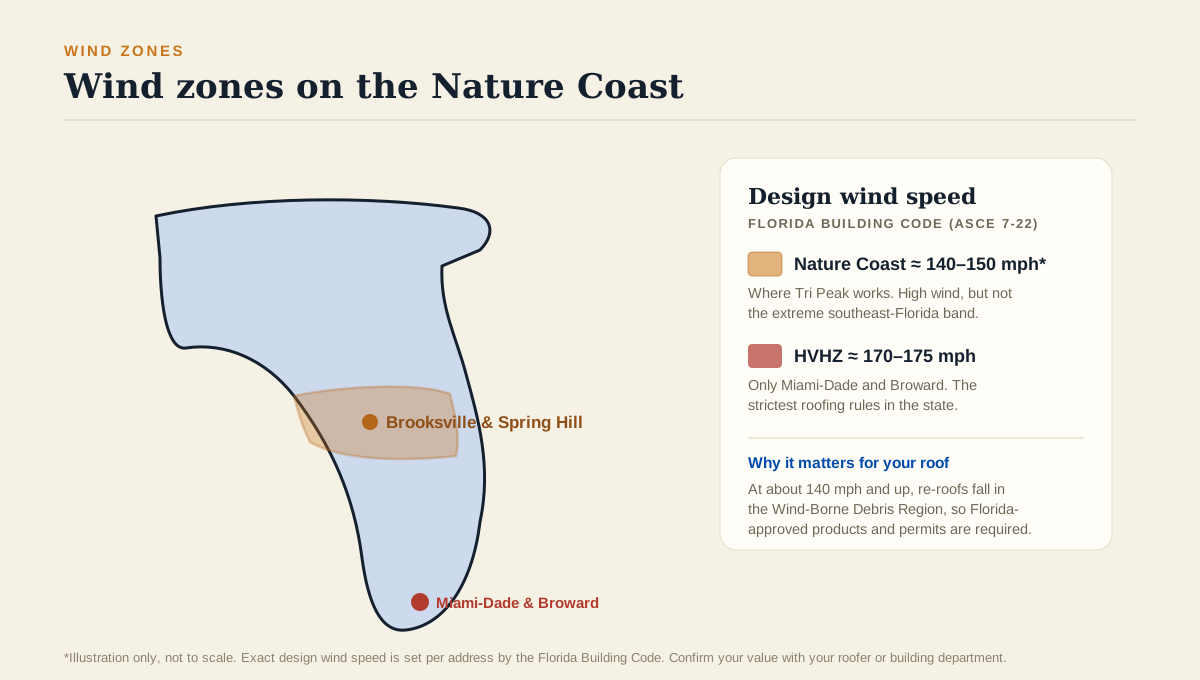
Florida Building Code & wind zones on the Nature Coast
Every re-roof in Florida is built to the Florida Building Code (2023, 8th Edition), which uses the ASCE 7-22 wind maps. The Nature Coast (Brooksville, Spring Hill, and the surrounding Hernando, Citrus, and Pasco County communities) generally falls in a design wind band of roughly 140–150 mph. That’s genuinely high wind, but it’s not the extreme band: the state’s strictest High-Velocity Hurricane Zone applies only to Miami-Dade and Broward.
At those wind speeds, much of the area falls within the Wind-Borne Debris Region, which means a re-roof must use Florida-approved products and be permitted and inspected correctly. Exact requirements can vary by address and jurisdiction; inland, higher-elevation Brooksville can differ from the coastal fringe. That’s one reason it pays to work with a local roofer who permits here every week. We handle roofs across Hernando County, Citrus County, and Pasco County.
Wind mitigation inspections & insurance discounts
Here’s the payoff most homeowners miss: the same features that make your roof stronger can also lower your insurance. Florida insurers apply wind-mitigation credits, documented on the state’s Uniform Mitigation Verification form (OIR-B1-1802), for features like a hip roof shape, enhanced deck attachment, a sealed roof deck, a wind-rated roof covering, and hurricane straps at the roof-to-wall connection.
How much you save depends entirely on your carrier and policy, so we won’t promise a dollar figure. That said, a sealed roof deck alone is frequently cited among the biggest wind-premium reducers, and a wind-mitigation inspection is often worth far more than it costs. A roof built to the IBHS FORTIFIED standard can earn additional credits in Florida. When we re-roof your home, we document the work so you can actually capture the discounts you qualify for.
Modern & new roofing styles that still stand up to storms
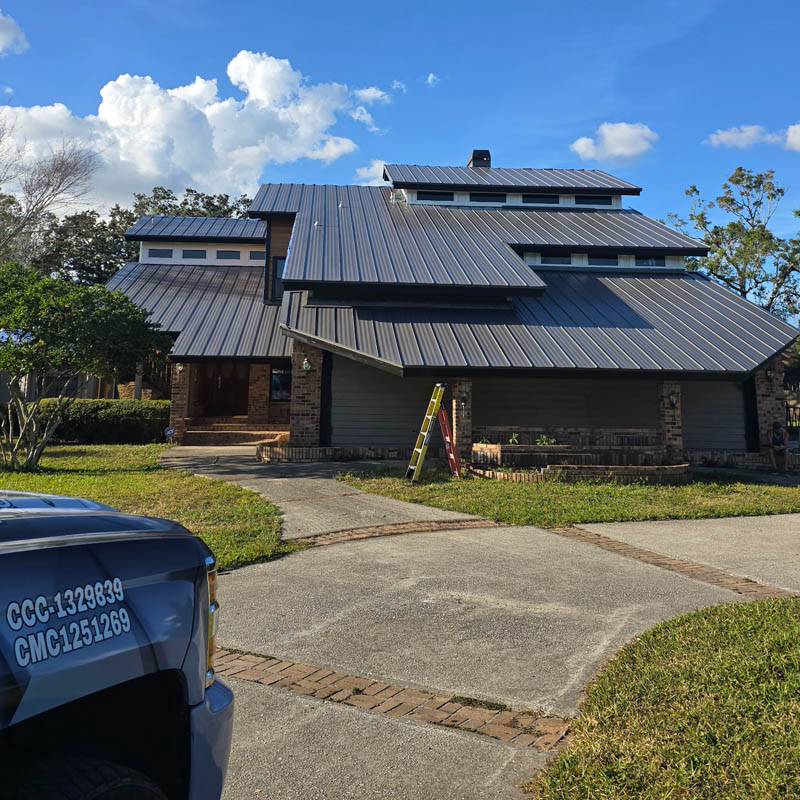
Storm-ready doesn’t have to mean plain. Some of the most current roofing looks are also among the toughest. Standing-seam metal now comes in a wide range of colors and profiles that give a clean, modern line while delivering the best wind performance of any covering. Metal also pairs with solar, including integrated systems like GAF Timberline Solar™, so you can modernize and harden the roof in one project.
If you’ve been browsing “new roofing styles” or metal roof colors, the good news is you don’t have to choose between looks and durability. We can show you real local examples across the Nature Coast and match a style to your home that also meets our wind zone.
Storm damage on the Nature Coast? What to do next
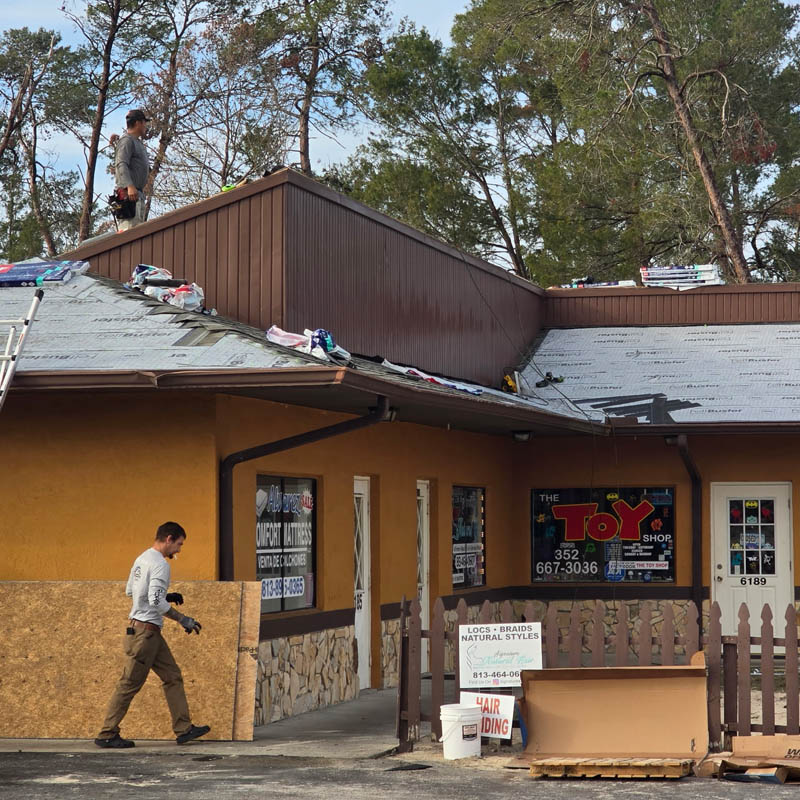
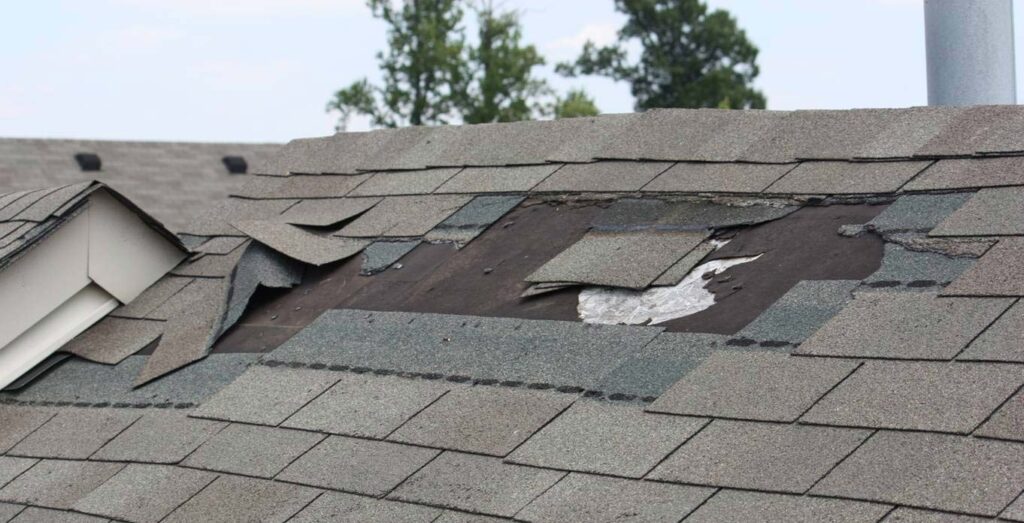
If a storm has already hit, move in this order: stay safe (never climb a wet or damaged roof), document everything with photos from the ground, don’t wait (small breaches turn into interior damage fast), and call a roofer before you file so your claim reflects the full scope of the damage.
We provide fast storm-damage repair across the Nature Coast, including Brooksville, Spring Hill, and the surrounding communities. We’ll inspect the roof, document the damage for your insurance, and give you honest options: repair or replace.
Frequently Asked Questions
What is the best roof for hurricanes in Florida?
The best-performing combination is a hip roof shape, a wind-rated covering such as standing-seam metal or a Florida-approved impact-rated shingle or tile, and, most important, a sealed roof deck with ring-shank nail attachment underneath. The hidden attachment and sealing details matter more than the material on top.
Is a metal roof better than shingles for hurricanes?
Generally yes for wind and impact: standing-seam metal’s interlocking panels and concealed fasteners resist the edge-peeling that tears off other roofs, and it dents rather than breaks under debris. It costs more upfront but lasts much longer. Class-4 architectural shingles are still a strong, more affordable option for our wind zone.
Does a hip roof lower my home insurance in Florida?
It can. A hip roof is one of the features credited on Florida’s wind-mitigation inspection form (OIR-B1-1802), along with deck attachment, a sealed roof deck, roof covering, and roof-to-wall connections. Actual savings depend on your carrier and policy; a wind-mitigation inspection is how those credits get documented.
What wind speed does a roof in Brooksville need to handle?
The Nature Coast generally falls in a design wind band of roughly 140–150 mph under the Florida Building Code (ASCE 7-22). Your exact design wind speed is set per address. It is not the extreme High-Velocity Hurricane Zone that applies only to Miami-Dade and Broward, but it is high enough that Florida-approved products and proper permitting are required.
What should I do right after storm damage to my roof?
Stay off the roof, document the damage with photos from the ground, act quickly before water causes interior damage, and call a roofer before filing your claim so the claim reflects the full scope. Tri Peak provides free storm-damage inspections and documentation across the Nature Coast.
Sources
- FEMA P-804: Wind Retrofit Guide for Residential Buildings
- IBHS FORTIFIED Roof standard
- U.S. DOE Building America Solution Center: Hip vs. Gable Roof
- FLASH: Sealed Roof Decks & Secondary Water Barriers
- Florida Building Code (2023) §1609.3: Ultimate Design Wind Speed
- Understanding asphalt shingle standards (ASTM D7158 / UL 2218)
Written By
Tyler Varn
Owner, Tri Peak Roofing · FL License CCC1329839
Tyler leads Tri Peak Roofing, a GAF-certified, Florida state-certified roofing contractor (License CCC1329839) based in Brooksville and serving the Nature Coast since 2010. He and his crews have installed and repaired roofs across Hernando, Citrus, Pasco, Lake, Hillsborough, and Pinellas counties through multiple Gulf hurricane seasons.
Related Guides
Get Your Free Roof Inspection Today
Honest assessment, clear pricing, and no pressure. Talk to a real Tri Peak roofer — not a call center.