Does My Safe Florida Home Pay for a New Roof in 2026?
By Tyler Varn, Owner, Tri Peak Roofing · Updated August 25, 2026
Quick Answer
My Safe Florida Home is a state grant program that pays to strengthen your home against hurricanes, and roof work is a big part of it. For the 2026-2027 budget year that began July 1, 2026, Florida reappropriated $378,336,198 to the grant program. Here is the part most homeowners get wrong: the grant does not buy you a new roof covering. It pays up to $10,000 toward three structural upgrades that keep your existing roof attached and watertight in a storm. It all starts with a free wind-mitigation inspection. Application windows open and close through the year, so check the live status at My Safe Florida Home before you count on it, and either way a free roof inspection tells you what your roof actually needs.
Is My Safe Florida Home funded in 2026?
Yes, for now. The program is funded for the 2026-2027 fiscal year that began July 1, 2026. The state budget signed June 29, 2026 reappropriated $378,336,198 in prior-year money to the mitigation-grant program, plus a separate $27,115,873 to the condominium pilot, for $405,452,071 combined. That is real funding. It is also a fixed pool that gets spent down, not an open-ended promise, and the program itself is set out in Florida Statute § 215.5586.
The nuance that matters: being funded is not the same as the application window being open on the day you apply. The program runs in cycles. It opens for applications, fills its inspection groups, pauses to work through the backlog, then reopens. It also does not work first-come, first-served. You answer a short prioritization questionnaire and get sorted into an inspection group, with priority going to low-income and older homeowners first.
Status as of August 25, 2026: the portal is open for accounts and grant applications, but new inspection applications are paused and grant funding is being described as available through the end of the month. This moves fast. Always confirm the current status at MySafeFLHome.com before you plan around it. We date this guide on purpose so you know how fresh it is.
| 2026-2027 My Safe Florida Home funding | Amount |
|---|---|
| Mitigation grants, inspections, and outreach | $378,336,198 |
| Condominium pilot program (separate) | $27,115,873 |
| Combined | $405,452,071 |
What roof work does the grant actually cover?
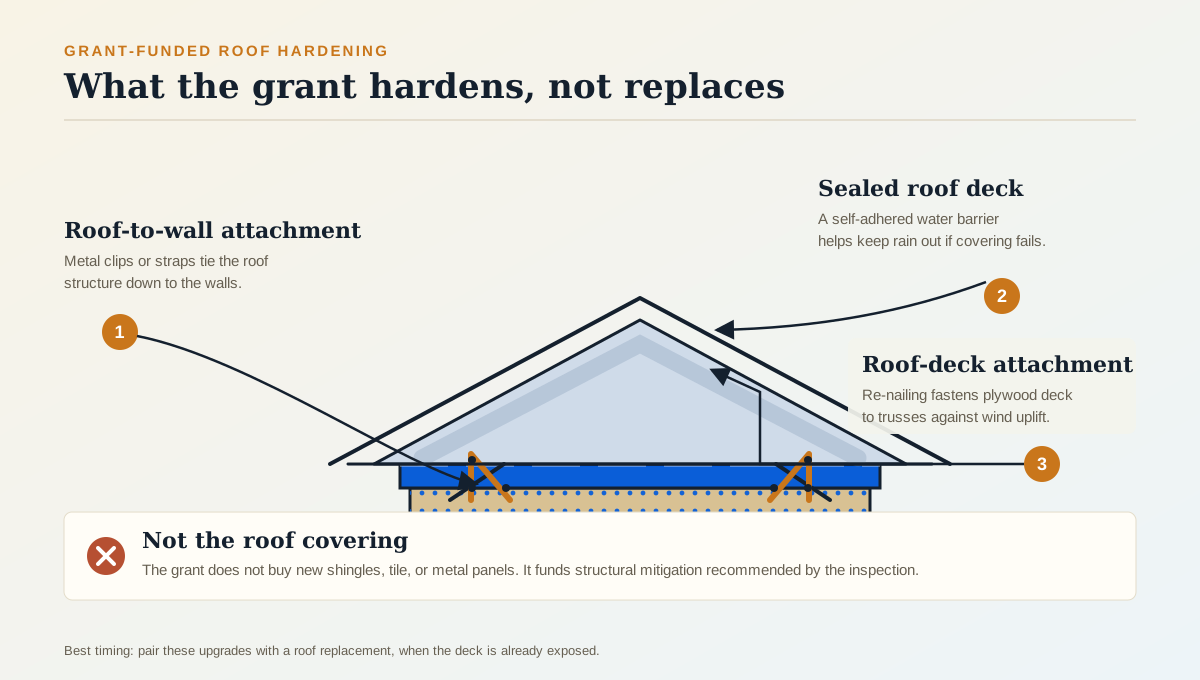
This is where most roofer blogs get it wrong, so read this part closely. My Safe Florida Home does not pay for a new roof covering. It will not buy you new shingles, new tile, or a new metal roof. What it funds is structural hardening: specific upgrades that keep your existing roof attached and keep water out when a hurricane hits.
There are four approved improvement categories, and three of them are roof work. Roof-to-wall attachment adds metal hurricane clips or straps that tie the roof structure down to the walls so the whole roof does not lift off. Roof-deck attachment means re-nailing the plywood deck to the trusses in a tighter pattern so the deck stays put under uplift. Secondary water resistance is a sealed roof deck, a self-adhered membrane over the deck seams that keeps wind-driven rain out even if the covering is torn away. The fourth category, opening protection, covers impact-rated windows, exterior doors, and garage doors. That is not roof work, so we will not pretend it is.
Because the grant hardens the structure and not the surface, the natural time to use it is when you are already planning a roof replacement. The deck re-nailing and sealed deck are done with the covering off, so pairing grant-funded hardening with a new roof is where it makes the most sense. A free wind-mitigation inspection is how you find out which of these upgrades your roof is missing.
How much money can you actually get?
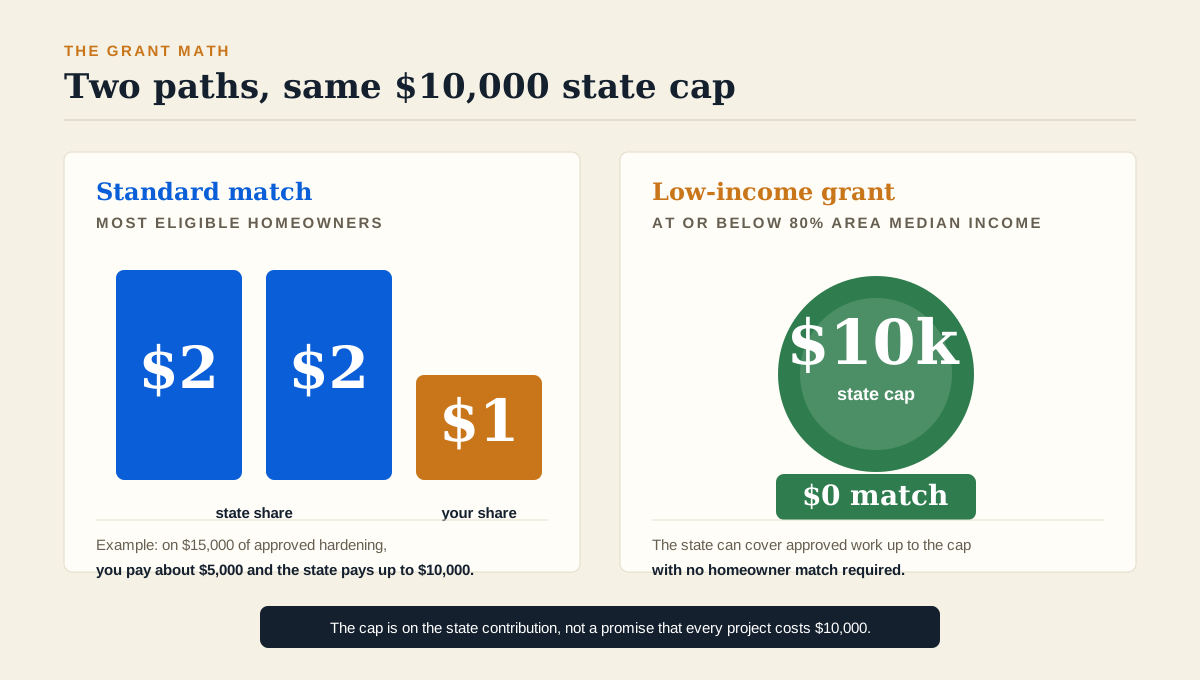
The grant caps the state’s contribution at $10,000 per home. How that splits depends on your income.
For most homeowners it is a matching grant. The state pays $2 for every $1 you put in, up to that $10,000 cap, which works out to you covering about one-third of the project. On a $15,000 hardening project, you would pay roughly $5,000 and the state would cover up to $10,000.
If you are a low-income homeowner, meaning your household is at or below 80% of your area’s median income, you can receive the full $10,000 with no match required. One myth to clear up here: some sites claim moderate-income homeowners, those between 80% and 120% of area median income, get a special match ratio. They do not. The match is the same 2-to-1 for everyone who is not low-income. Your income mainly affects your priority in line and whether you owe a match, not the size of the cap.
| Who you are | Your match | State pays up to |
|---|---|---|
| Low-income (at or below 80% of area median income) | None | $10,000 |
| Everyone else who is eligible | $1 for every $2 from the state | $10,000 |
Do you qualify? The eligibility checklist
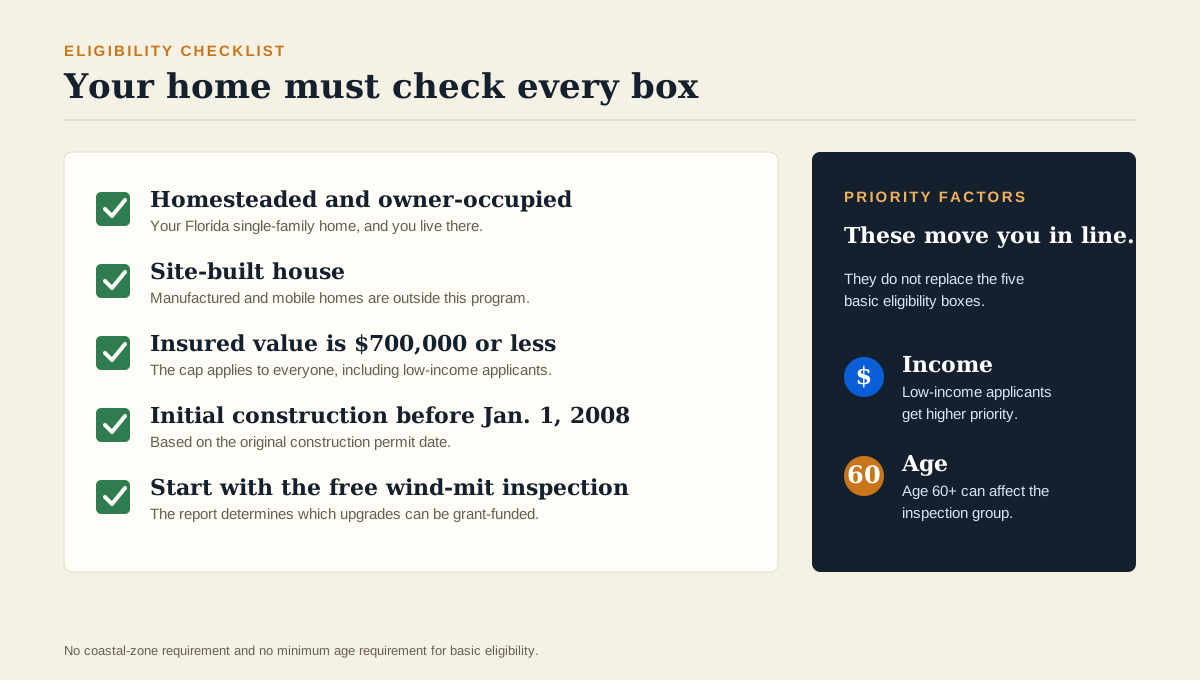
The program is for owner-occupied Florida homes, and the requirements are specific. Your home needs to check all of these boxes. It is your homesteaded, owner-occupied single-family home. It is site-built, not a manufactured or mobile home. Its insured value is $700,000 or less. A correction on that last one: the value cap is not waived for low-income homeowners. An older line in the statute suggested it was, but the controlling language keeps the $700,000 limit for everyone. It was permitted for initial construction before January 1, 2008. Newer homes were already built to a stronger code, so the grant targets older ones.
There is no requirement that you live in a specific coastal zone, and there is no minimum homeowner age to qualify. Age and income affect your priority in the inspection queue, not whether you are eligible at all. And the wind-mitigation inspection that starts the process is free, with no obligation to do any work afterward.
How the process works, from inspection to reimbursement
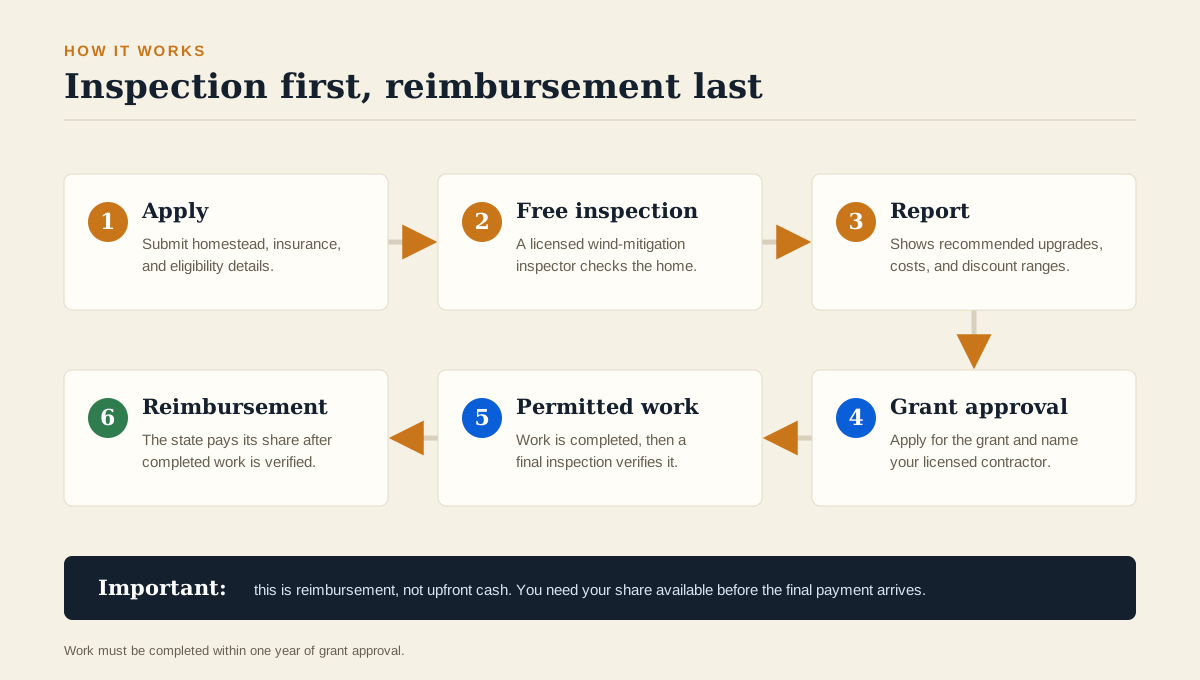
The order of operations matters, because this is a reimbursement program, not upfront cash. You apply with your homestead and eligibility details. The state sends a licensed inspector for a free wind-mitigation inspection. You get a report that lists the recommended upgrades, a range of what they cost, and an estimate of the insurance discounts they could earn. You then apply for the grant and name the licensed roofing contractor you want to do the work. Permits are pulled, the work is done, and a final inspection verifies it. Only then does the state pay its share.
Two things trip people up. First, you front the money and the state reimburses its portion after the work is verified, so you need your share available up front. Second, the work has to be finished within one year of grant approval. Choosing a local contractor who permits and schedules quickly matters more than it sounds.
The free inspection is worth it even without the grant
Here is what makes this worth your time even if the grant window is closed the week you check: the wind-mitigation inspection is valuable on its own. It is documented on Florida’s Uniform Mitigation Verification form (OIR-B1-1802), the same form insurers use to apply wind-mitigation credits to your premium.
Features like a hip roof, a sealed roof deck, enhanced deck attachment, and roof-to-wall straps can all lower what you pay for insurance. How much depends entirely on your carrier, so we will not quote you a number. But the inspection tells you exactly which credits your roof already earns and which upgrades would add more. If you want the full picture on storm-hardening your roof, our guide to the best roof for a Florida hurricane walks through the shapes, materials, and deck details that matter most.
Myth-buster: Florida did not pass a new roof-age insurance law in 2026
While we are correcting things: if you have seen a blog or a social post claiming Florida passed a new roof-age insurance law that takes effect in 2026, it is wrong. Two bills tried to change how insurers treat older roofs, SB 808 and HB 815. Both died in committee on March 13, 2026, the last day of the 2026 session. Neither became law. Any content telling you a 2026 roof-age law is now in effect is repeating a mistake.
What actually governs is still the 2022 law. Under Florida Statute § 627.7011, an insurer cannot refuse to write or renew your policy just because your roof is less than 15 years old. For a roof that is 15 years or older, the insurer has to let you get an inspection first, and cannot drop you over roof age alone if that inspection shows the roof has 5 years or more of useful life left.
One more that gets mangled: the “25 percent rule.” That is the rule that says if you repair or replace 25% or more of a roof, normally the whole thing has to be brought up to current code. Since 2022, the exception in § 553.844(5) means that if your home already met the 2007 Florida Building Code or later, only the section being worked on has to meet today’s code, not the entire roof. Note that this one is a building-code rule, not an insurance rule, which is a distinction a lot of write-ups get wrong.
What this means for Nature Coast homeowners
A lot of the homes across the Nature Coast were built before January 1, 2008, which is exactly the age the grant is aimed at. If your roof predates the stronger post-2007 codes, hardening it is one of the highest-value things you can do, grant or no grant.
Tri Peak is a licensed local roofer, which is who you name on the grant application when you reach that step. We do the structural hardening the grant funds and the roof replacement it does not, so you are not juggling two companies. We permit and inspect across Hernando County, Citrus County, and Pasco County, including Brooksville, Spring Hill, and the surrounding communities.
Whether the grant window is open or closed the day you read this, the first step is the same: find out what your roof actually needs. That is what a free inspection is for.
Frequently Asked Questions
Does My Safe Florida Home pay for a new roof?
No. The grant funds structural upgrades that harden your existing roof, such as roof-to-wall straps, deck re-nailing, and a sealed roof deck. It does not pay for a new roof covering like shingles, tile, or metal. The best time to use it is during a roof replacement you are already planning, when those upgrades are easiest to add.
Is My Safe Florida Home still funded in 2026?
Yes. The 2026-2027 state budget reappropriated $378,336,198 to the mitigation-grant program, effective July 1, 2026. But funding is a fixed pool and the application window opens and closes in cycles, so check MySafeFLHome.com for the live status before you plan around it.
How much is the My Safe Florida Home grant?
The state pays up to $10,000 per home. For most homeowners it is a 2-to-1 match, so you cover about one-third of the project cost. Low-income homeowners at or below 80% of area median income can receive the full $10,000 with no match required.
Who qualifies for My Safe Florida Home?
Your home must be your homesteaded, owner-occupied, site-built single-family home with an insured value of $700,000 or less, and it must have been permitted for construction before January 1, 2008. The wind-mitigation inspection that starts the process is free and carries no obligation.
Did Florida pass a new roof insurance law in 2026?
No. The 2026 bills that would have changed roof-age insurance rules, SB 808 and HB 815, both died in committee on March 13, 2026. The law that still governs is from 2022: insurers cannot refuse to renew a policy solely because a roof is under 15 years old, and for older roofs they must allow an inspection that can show the roof has 5 years or more of useful life left.
Sources
- My Safe Florida Home — official program site
- Fla. Stat. § 215.5586 — My Safe Florida Home Program
- Fla. Stat. § 627.7011 — roof-age non-renewal and inspection rules
- Fla. Stat. § 553.844 — building-code roof repair (25% rule) exception
- SB 808 (2026) bill history — died in committee
- HB 815 (2026) bill history — died in committee
- FY2026-27 General Appropriations Act (HB 5001E)
Written By
Tyler Varn
Owner, Tri Peak Roofing · FL License CCC1329839
Tyler leads Tri Peak Roofing, a GAF-certified, Florida state-certified roofing contractor (License CCC1329839) based in Brooksville and serving the Nature Coast since 2010. He and his crews have installed and repaired roofs across Hernando, Citrus, Pasco, Lake, Hillsborough, and Pinellas counties through multiple Gulf hurricane seasons.
Related Guides
Get Your Free Roof Inspection Today
Honest assessment, clear pricing, and no pressure. Talk to a real Tri Peak roofer — not a call center.